• Home
  • “1-a-Day Album Project”
  • Articles
  • Blog
  • Contact
Menu

Robert Bittner

Street Address
City, State, Zip
Phone Number
Freelance writer, musician, tech fan, cat lover

Freelance writer, musician, tech fan, cat lover

Robert Bittner

  • Home
  • “1-a-Day Album Project”
  • Articles
  • Blog
  • Contact

Day 16: Talking Heads, “Remain in Light”

August 23, 2022 Robert Bittner

When: Released October 8, 1980

Why? I’ve heard a couple of Talking Heads radio singles (I love “Burning Down the House”) but never an album. Rolling Stone ranks this at #39 in their list of the top 500 albums (from all popular genres) of all time. The only track I had heard before was “Once in a Lifetime.”

What? Eight songs, 40 minutes. Music journalist Daryl Easlea calls this “Talking Heads’ greatest statement.”

First Impressions: This feels like an album that will only reveal itself with multiple listens.

To me, this is art-pop, with oblique, stream-of-consciousness lyrics frequently delivered in spoken-sung style by David Byrne. I was two songs in before I realized that each one was built on a single chord, with no chord changes. That one-chord-per-song approach continued for the entire album. To add interest and variety, sometimes other chords are hinted at by Tina Weymouth’s bass notes or Byrne’s top-line melodies. In addition each chord is expanded upon by a multilayered instrumental track recorded to sound like a continuous loop, although each one is actually a real band performance. (Seamless computer-based looping was not an option in 1980.)

Apparently, this album was heavily inspired by African rhythms and melodies—at least that was the case for Byrne’s songwriting—and that comes through from the very first notes. What was less clear for me was the meaning or intent behind most of the tracks. (Producer Brian Eno has been quoted as saying he doesn’t believe lyrics are necessarily the heart of a song.)

Meaning aside, I enjoyed most of the tracks here. The less-successful ones for me were the opener, “Born Under Punches,” and the closer, “The Overload.” I especially enjoyed “The Great Curve,” “Once in a Lifetime,” “Houses in Motion,” and “Seen and Not Seen.”

One surprise for me was discovering how the musical arrangements here reminded me of tracks from Godley & Creme’s “Ismism” (1981). It wouldn’t surprise me if Kevin Godley and Lol Creme had heard and been inspired by “Remain in Light” prior to writing their own album (originally released as “Snack Attack” in the U.S.).

So? Given the somewhat experimental approach of this album—all songs based on a single chord, musical performances meant to sound like repeating loops—I’m not sure it’s a fair representation of what a typical Talking Heads album might sound like. But I didn’t dislike any of the songs, and I enjoyed six of the eight. The musicianship required to sound like a computerized loop when actually playing live is remarkable; Byrne’s voice is appealing and interesting to me, providing just the right tone of quirky detachment; and the songwriting offers ample food for thought.

In 1-a-Day Album Project, Album Appreciation Tags David Byrne, Tina Weymouth, Brian Eno, Godley & Creme

Day 15: Jethro Tull, “Aqualung”

August 22, 2022 Robert Bittner

When: Released March 19, 1971

Why? This is Tull’s best-selling album. While I’ve heard the opening riff of “Aqualung” (which I only discovered during this listen), I’ve never actually heard the song or anything else on this album. My only previous Jethro Tull experience was the radio single “Bungle in the Jungle” (1974).

What? Eleven songs, 44 minutes.

First Impressions: My pre-listen image of the band, based largely on Ian Anderson’s stage attire (and eccentricities) and his flute playing, was that their songs would all be English-folky with a dash of hippy—songs about fairies, mystical flower-filled meadows, and country fairs. I wasn’t completely wrong: There is at least one song like that here (“Mother Goose”). But the rest of the tracks cover a wide range of lyrical ground, including society’s ills (“Aqualung,” “Cross-Eyed Mary”), religious hypocrisy (“My God,” “Hymn 43,” “Wind-Up”), and helplessness in the face of life’s events (“Cheap Day Return,” “Locomotive Breath”).

Largely acoustic—with only the occasional bite of electric guitars—these songs tend to avoid traditional verse/chorus/verse structure. In most, it would be a challenge to even identify a chorus. Instead, Anderson favors expansive storytelling, with instrumentation that only rarely repeats themes and riffs.

For songs emphasizing narrative and imagery, the lyrics aren’t always clear enough to know exactly what story is being told. And when they are clear, they typically come off sounding preachy, telling listeners exactly how we’re supposed to feel about a character, a situation. (See: “Aqualung.”) Musically, the performances are very good. But because there’s so little structure to these songs, the listener has few melodic hooks to hold onto. As a result, this wasn’t a memorable or even particularly entertaining listen for me.

On the plus side: I enjoy the sound of Anderson’s voice, and his flute playing is as immediately recognizable as Stevie Wonder’s harmonica. My favorite tracks were probably “Cheap Day Return” (for its concise, apt storytelling) and “Locomotive Breath” (for the way it presented its subject matter, as well as the driving musical arrangement).

So? Additional listens may reveal meaningful layers. But there isn’t a single track here that I feel compelled to revisit. Having heard this album once, I’m okay with moving on.

In 1-a-Day Album Project, Album Appreciation Tags Ian Anderson, Locomotive Breath, Aqualung

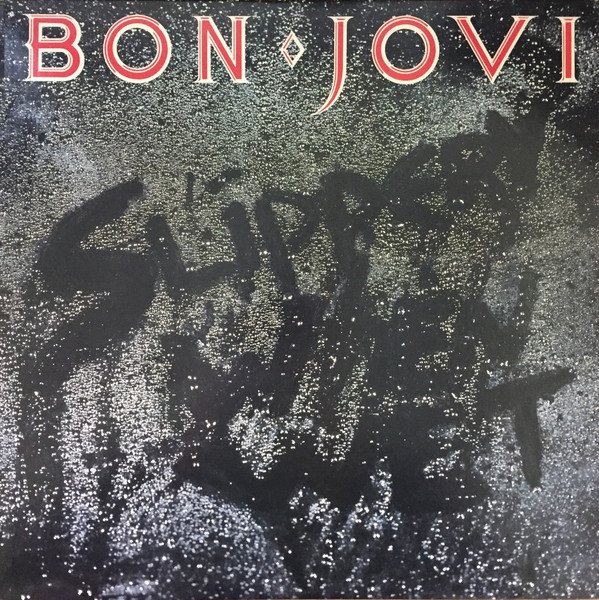
Day 14: Bon Jovi, “Slippery When Wet”

August 21, 2022 Robert Bittner

When: Released August 18, 1986

Why? This is one of the best-selling albums of all time. I’ve only heard Bon Jovi radio singles, including three tracks from this album.

What? Ten songs, 44 minutes.

First Impressions: I have really mixed feelings about this.

Opener “Let It Rock” is not a great song, but it starts the album in high gear. And it leads into the album’s two highlights: “You Give Love a Bad Name” and “Livin’ on a Prayer,” songs that put a wide smile on my face during this listen. The vocals and instruments on these tracks are perfect examples of mid-1980s pop-rock songwriting and production. (I could imagine Heart doing a great version of “You Give Love…”)

Unfortunately, the album never again hits that level of excitement. “Social Disease” is a considerable drop in quality, while “Raise Your Hands,” clearly intended to be a stadium rocker, is an endless string of tired clichés that pile up into nonsense. Similarly, “Without Love” and “Never Say Goodbye” are crippled by some embarrassingly bad lyrics and regrettable sentiments. “I’d Die for You,” while generally stronger, stumbles when it comes to a coherent chorus melody. “Wild in the Streets” seems to have come from a different band entirely, featuring imagery and vocabulary unlike anything on the previous tracks, as if they’d copied it verbatim from Bruce Springsteen’s notebook when he wasn’t looking.

My mixed feelings carry over to the third big hit on this album: “Wanted: Dead or Alive.” On the surface, it’s a meaningful power ballad. But comparing the touring life of a rock star with the life of a cowboy doesn’t bear scrutiny; in fact, it falls apart when you really think about it. (But I gather we’re not supposed to be really thinking about the songs on this album.) In addition, the main chorus hook just doesn’t make sense in the context of the cowboy/touring-band metaphor: “Wanted dead or alive” was something law enforcement said about serious criminals, not cowboys. And who, exactly, wants Bon Jovi if they’re dead?

Setting aside the weak chorus of “I’d Die for You,” this album shines in its melodies and production. Unlike the lyrics, no musical clichés jumped out at me; I found the arrangements inventive and infectious. I enjoyed Richie Sambora’s guitar playing, and I found his tone unique and appealing. The vocal harmonies were also strong, reminding me a lot of Mutt Lange-produced Def Leppard.

Less appealing for me, though, was lead singer Jon Bon Jovi’s performance. “Let It Rock” was at least a whole step too high for him to sing comfortably. In other songs, he sounded strident—even whiny—at times.

So? I was surprised how much I enjoyed “You Give Love…” and “Livin’ on a Prayer.” And I was equally surprised that nothing else on the album matched the quality of those tracks. Instrumentally, the album is dynamite. But even on an album meant to be mindless, I still want lyrics I can sing along to without feeling ignorant.

In 1-a-Day Album Project, Album Appreciation Tags Jon Bon Jovi, Livin’ on a Prayer, Def Leppard, Mutt Lange

Day 13: Green Day, “Dookie”

August 20, 2022 Robert Bittner

When: Released February 1, 1994

Why? A coworker so enjoyed this album, he loaned me a cassette of it the year it came out. Back then, I didn’t know if “Green Day” was the name of the album or the band! But I listened to it—or at least told him I did. I have zero memory of the experience. Since this is the band’s best-selling album at a reported 20 million copies, and it won the Grammy for alternative rock, I decided to finally give it a real listen.

What? Fifteen songs, 38 minutes.

First Impressions: My pre-listening image of Green Day was that they are an alternative punk band. Maybe that colored my expectations. Because after listening to “Dookie,” I didn’t think the band had anything in common with the punk artists I knew. All these inward-looking songs about boredom, laziness, and broken relationships sounded like the exact opposite of what I thought punk should be (based on my limited experience with the genre). This was slacker rock, and I didn’t get it.

After that first listen, I did some research into the making of the album, the stories behind the songs, and the critical appraisal. I wanted to find out why this album is held in such high regard. What was I missing?

I listened again.

That second listen highlighted one of the things I’ve learned about musical appreciation: Sometimes I have to give an album multiple listens before it becomes a favorite. I can’t say that “Dookie” will fall into the “Favorite” category, but I definitely understood it more and appreciated it more the second time around.

The lyrics still don’t relate to my own experience. But I can now see a depth of storytelling (and even satire) that I completely missed the first time. The instrumental performances are terrific and the band is well produced. The guitars sound fantastic and the drums and bass are powerful and even virtuosic. (Mike Dirnt’s bass playing is ridiculous.) I appreciated the use of vocal harmonies throughout. And I especially appreciated the moments when I heard echoes of bands from the Sixties that I love (the Beatles, yes, but also harmonies that sounded directly inspired by the Yardbirds’ “For Your Love”), which suggest that Green Day has been listening to and building upon those legacies.

So? Given my feelings about the for-their-generation-only lyrics, it’s hard for me to say I really liked this. I’m not sure I’ll ever revisit it. But I’m glad to have heard it. And I’m especially glad I gave it a second chance and listened with new ears.

In 1-a-Day Album Project, Album Appreciation Tags punk music, Green Day, Billie Joe Armstrong

Day 12: Halestorm, “Back from the Dead”

August 19, 2022 Robert Bittner

When: Released May 6, 2022

Why? Although this is the band’s fifth album—and they’re Grammy winners—I’ve only been introduced to Halestorm this year, through a series of feature articles in Classic Rock, Total Guitar, etc. promoting this new release. I was curious to see what they brought to the modern-rock table.

What? Eleven songs—38 minutes—of hard rock exploring personal empowerment and self-acceptance in a world turned upside down by politics, a pandemic, and prejudice.

First Impressions: Wow. Maybe I have particular appreciation for female rockers, having grown up on the Runaways, Blondie, Joan Jett, and Heart. Maybe, having recently heard albums that I thought were overlong or meandering, I welcomed this album’s compact, visceral punch. Whatever. This won me over from the very first track, “Back from the Dead,” and kept me riveted until the end.

This is tight, well-produced hard rock, played by people who know what they’re doing. The drumming by Arejay Hale is propulsive, explosive. Lead and support guitars from Joe Hottinger are perfectly fit to the songs, with no time wasted on soloing for soloing’s sake. Bassist Josh Smith underpins the chords perfectly, even if he may be a tiny bit low in the mix. (Or maybe I’m saying that because I’ve just come from a Flea record!)

And then there’s guitarist and vocalist Lzzy Hale herself. Again: Wow. My throat hurts just listening to her full-throttle vocals. (There is a moment about two-thirds of the way through “Psycho Crazy” when Hale not only turns it up to 11, she somehow finds 12. My jaw literally dropped.) To my ear, she showcases vocal qualities that remind me of Joan Jett, Grace Potter, Brian Johnson, and James Hetfield—all delivered in a dynamic performance that can shift from a shout to a whisper, from gravel-rough to Amy Lee clarity. (For a sample of what I mean, compare the anthemic “The Steeple” with the piano-driven “Raise Your Horns.”)

There was not a weak or superfluous track on the album. Every song brought something new to the table. And while experienced listeners will be able to anticipate some moments (e.g., a full-out chorus that drops to a stripped-down verse), I think they’ll also find plenty of unexpected nuance and even restraint (again, “Raise Your Horns”).

The unexpected also carries over to the lyrics. Most songs were written by Lzzy Hale and Scott Stevens, and they display a refreshing blend of attitude, point of view, intention, and smarts. Above all, though, these songs sound like they were written for fans. I don’t mean they were designed for fans to sing along to (although that’s clearly true for some of them); I mean they were designed to speak to fans, as if Lzzy herself were sitting down with them, face to face, to tell them what’s on her heart. When I can come to these tracks for the first time, with no Halestorm history, and feel that sentiment through the songs… Well, I think that’s remarkable.

So? There were a couple of moments during my listen when the combination of emotionally raw lyrics and Hale’s vocal performance actually brought tears to my eyes. Who expects that from hard rock?

I loved this album.

In 1-a-Day Album Project, Album Appreciation Tags hard rock, Halestorm, Lzzy Hale, Joan Jett, Grace Potter
← Newer Posts Older Posts →

Powered by Squarespace